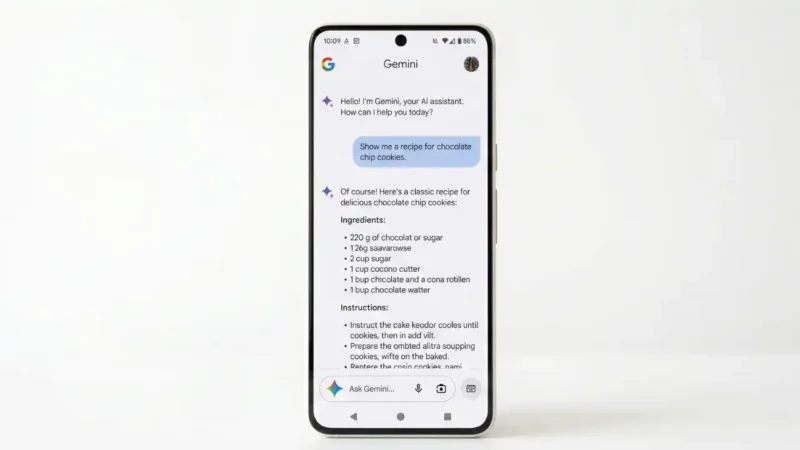
Google could soon bring advertising into its AI chatbot experience. During a recent earnings call, a senior executive indicated that the company is open to introducing ads inside the Gemini AI app, signaling a possible shift in how AI assistants are monetized.
If implemented, this would mark a significant step in turning conversational AI into a revenue-generating platform.
Also read: Google Reports Record Growth: 350 Million Subscriptions and Peak Search Activity in Q1 2026
Ads Already Exist in Google’s AI Ecosystem
Before jumping to Gemini, it’s important to understand the current situation.
Google is already showing ads in:
- AI Overviews within search results
- Sponsored placements tied to user queries
- Shopping and performance-based campaigns
These ads are integrated alongside AI-generated answers, meaning the transition to Gemini wouldn’t be a completely new concept.
What Google Executive Said
During the earnings discussion, a key Google executive suggested:
- The company is actively exploring ads in AI experiences
- Formats that work in AI search could be applied to Gemini
- Advertising could play a major role in Gemini’s growth
In simple terms, if ads work in AI search, Google sees no reason not to extend them into its chatbot.
Why Google Wants Ads in Gemini
Let’s be direct—this is about money.
AI tools are expensive to run:
- High compute costs
- Infrastructure investment
- Continuous model training
To sustain this, Google needs a scalable revenue model, and ads are its strongest asset.
How Ads Might Work in Gemini
While nothing is confirmed, based on current patterns, ads could appear as:
- Sponsored suggestions within conversations
- Product recommendations tied to queries
- Shopping results integrated into responses
The idea will likely be to make ads feel “natural” rather than intrusive.
Also read: OpenAI’s AI-First Phone Could End the App Era
Competition With OpenAI
This move would put Google in direct competition with OpenAI, which has already started experimenting with ads in ChatGPT.
Key points:
- Ads are shown to certain user groups
- They are labeled as sponsored
- The company claims ads don’t influence AI responses
Google entering this space means AI monetization is becoming a serious battleground.
Potential Concerns
This shift raises some important questions:
- Will ads affect the quality of responses?
- Can users trust AI recommendations?
- Will the experience feel cluttered?
Even if companies claim neutrality, user perception matters more than statements.
Reality Check
Let’s not overthink this—ads in AI are inevitable.
- Google’s business is built on advertising
- AI tools need monetization
- Free users will likely see ads first
The only real question is how aggressively ads will be integrated.
Also read: OpenAI and Microsoft Reshape Partnership, Drop AGI Clause and End Exclusivity
Final Thoughts
Google bringing ads to the Gemini app is not surprising—it’s the logical next step. The company is already blending AI and advertising in search, and extending that model to chat-based experiences is a natural move.
But here’s the truth:
If ads feel forced or biased, users will push back.
If they’re subtle and useful, most people won’t care.
Execution will decide whether this becomes a smart business move or a user experience problem.