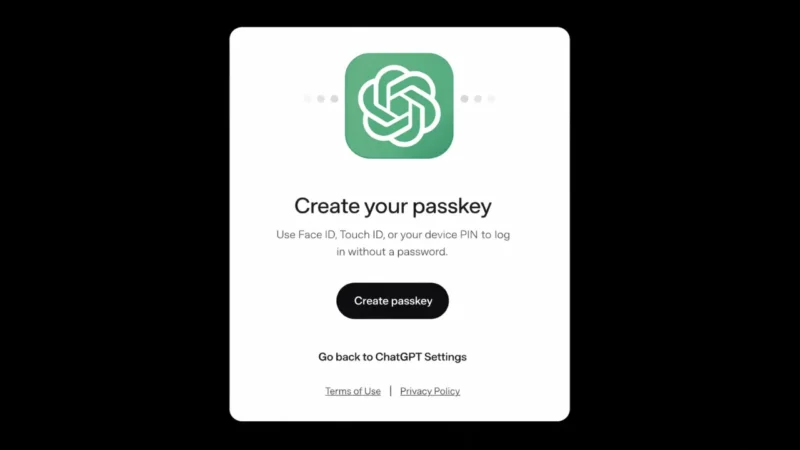
Keeping your online accounts secure is more important than ever. If you use OpenAI services regularly, protecting your account should be a top priority. One of the most secure and modern ways to do that is by using passkeys instead of traditional passwords.
In this guide, you will learn what passkeys are, how they work, and how to set them up to secure your OpenAI account.
Also read: How to Create Images Using Sora AI on Your Phone or Computer
What Are Passkeys?
Passkeys are a passwordless authentication method designed to replace traditional passwords. Instead of typing a password, you verify your identity using:
- Fingerprint
- Face recognition
- Device PIN
- Hardware security key
Passkeys are based on public key cryptography and are much more resistant to phishing attacks, data breaches, and password leaks.
Why Use Passkeys for Your OpenAI Account?
Here are the main benefits:
Stronger Security
Passkeys cannot be guessed, reused, or stolen in phishing attacks like regular passwords.
No Password to Remember
You do not need to remember complex passwords.
Device-Based Protection
Authentication happens directly on your trusted device.
Faster Login
Signing in takes seconds using biometric verification.
Requirements Before Setting Up Passkeys
Before enabling passkeys, make sure:
- You have a supported device such as a modern smartphone, tablet, or computer.
- Your browser supports passkeys, such as Chrome, Edge, Safari, or Firefox.
- Your device has biometric authentication or a secure screen lock enabled.
How to Set Up Passkeys for Your OpenAI Account
Follow these steps:
Step 1: Sign In to Your OpenAI Account
Go to the official OpenAI website and log in normally using your existing method.
Step 2: Open Account Settings
Navigate to your profile or account settings section.
Step 3: Go to Security Settings
Look for the security or login settings area.
Step 4: Add a Passkey
Select the option to add or enable passkeys.
Your device will prompt you to verify using fingerprint, face recognition, or device PIN.
Step 5: Confirm Setup
Once verified, the passkey will be saved securely to your device.
From now on, you can sign in using biometric authentication instead of typing your password.
Can You Use Passkeys on Multiple Devices?
Yes. You can add passkeys on:
- Smartphone
- Laptop
- Tablet
Some ecosystems such as iCloud Keychain or Google Password Manager can sync passkeys across devices securely.
What If You Lose Your Device?
If you lose access to a device:
- Use another registered device to log in.
- Access your account security settings.
- Remove the lost device from your passkey list.
It is also recommended to keep a backup login method enabled.
Passkeys vs Passwords
| Feature | Password | Passkey |
|---|---|---|
| Can be guessed | Yes | No |
| Phishing risk | High | Extremely low |
| Easy to remember | No | Yes |
| Biometric support | No | Yes |
Passkeys provide a safer and more convenient experience compared to traditional passwords.
Additional Security Tips for OpenAI Accounts
Even with passkeys enabled, you should:
- Keep your devices updated
- Use screen lock protection
- Avoid logging in on shared computers
- Enable two-factor authentication if available
Layered security always improves protection.
Also read: How to Use ChatGPT for the First Time: A Beginner Friendly Guide
Final Thoughts
Protecting your OpenAI account with passkeys is one of the smartest security upgrades you can make. It eliminates the risks associated with weak or reused passwords and provides fast, secure access using your device’s built-in authentication.
If you care about account safety and convenience, enabling passkeys is a simple yet powerful step toward better online security.