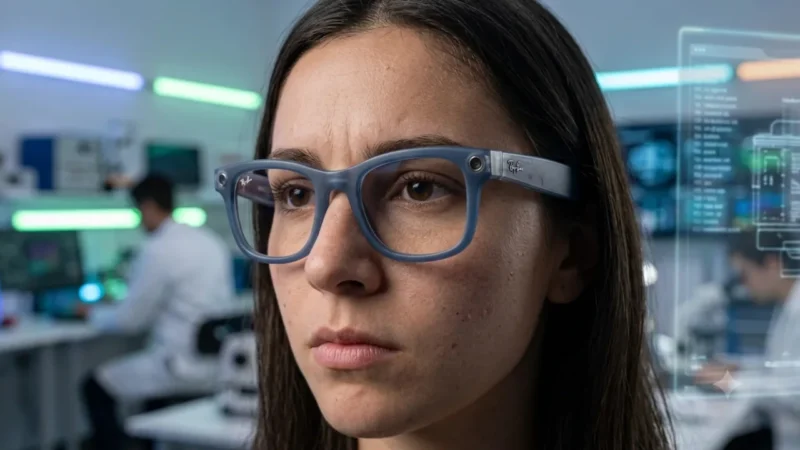
Smart glasses are quickly moving from futuristic gadgets to everyday wearable devices. Tech giants like Meta, Snap, Google, and Apple are investing heavily in this new category, promising features like AI assistance, hands-free photography, live translations, and augmented reality experiences.
But as smart glasses become more common, another conversation is gaining attention: privacy.
Many of today’s smart glasses look almost identical to regular eyewear, making it difficult for people to know when they’re being photographed or recorded. While these devices offer exciting new possibilities, they also raise important questions about personal privacy in public spaces.
Also read: Meta Unveils New AI-Powered Smart Glasses With Muse Spark AI, 12MP Camera and Live Translation
Smart Glasses Are Becoming Mainstream
Until recently, smart glasses were considered niche gadgets. That is changing rapidly.
Meta recently expanded its wearable lineup with new AI-powered smart glasses available in multiple styles and price points. Upcoming products from companies like Snap, Google, and other manufacturers are expected to make wearable AI even more accessible over the next year.
Unlike bulky augmented reality headsets, modern smart glasses are lightweight and resemble ordinary prescription or sunglasses, making them much easier to wear throughout the day.
The Privacy Concern Everyone Is Talking About
The biggest concern surrounding smart glasses isn’t the technology itself—it’s the tiny camera built into the frame.
Unlike smartphones, which are usually obvious when someone starts recording, smart glasses allow users to capture photos and videos with a simple voice command or button press. Since the camera is integrated into the frame, many people may never realize they’re being recorded.
Privacy experts have warned that this could lead to misuse, especially in crowded public places, restaurants, public transport, protests, or other sensitive environments.
Although recording in public is legal in many places, secretly capturing someone’s image without their knowledge often raises ethical concerns.
How to Identify Camera-Equipped Smart Glasses
Fortunately, most mainstream smart glasses include visual indicators that show when recording is taking place.
Here are a few signs to look for:
Look for the Camera Lens
Most camera-equipped smart glasses have a small lens built into the front of the frame.
For example, Meta’s glasses place the camera near the upper corner of the frame, where it blends naturally into the design.
Watch for the LED Indicator
Nearly all major brands include a small LED light that turns on whenever the user captures a photo or records video.
The light usually:
- Flashes when taking a picture
- Pulses during video recording
This is designed to let nearby people know that recording is happening.
Listen for Audio Signals
Some smart glasses also play a subtle shutter sound when taking photos.
However, in noisy environments, these sounds can easily go unnoticed.
Why Identifying Smart Glasses Isn’t Always Easy
Although manufacturers include privacy indicators, they aren’t always easy to notice.
Bright sunlight can make tiny LED lights difficult to see. In crowded places, people rarely pay close attention to someone’s eyewear.
Security researchers have also pointed out that some users attempt to cover or disable recording indicators, despite manufacturer guidelines discouraging such modifications.
This makes public awareness increasingly important as wearable cameras become more common.
Not Every Smart Glasses Model Has a Camera
It’s also worth remembering that not all smart glasses are designed for photography.
Some models focus on:
- Audio playback
- Voice assistants
- Live translations
- Navigation
- Display notifications
- Virtual monitors
These devices may include microphones and tiny displays without any built-in camera.
Understanding the difference can help avoid unnecessary confusion.
Smart Glasses Also Have Genuine Benefits
While privacy concerns deserve attention, smart glasses also offer several practical advantages.
They can help creators record hands-free videos, assist professionals during work, support navigation, translate conversations in real time, and improve accessibility for users with visual impairments.
Artificial intelligence is also making these devices more useful by allowing users to ask questions about what they’re seeing, receive reminders, or interact with digital assistants without reaching for their phones.
Like many emerging technologies, the impact depends largely on how responsibly people choose to use them.
The Future of Wearable Cameras
Smart glasses are expected to become much more common over the next few years. As companies continue adding AI-powered features, these devices may eventually become as popular as smartwatches.
At the same time, governments, technology companies, and consumers will likely continue debating how wearable cameras should be used and what privacy protections are necessary.
For everyday users, simply recognizing camera-equipped smart glasses and understanding how they work is becoming an increasingly valuable digital skill.
Also read: Gemini in Chrome Gets New ‘Select From Screen’ Feature for Faster AI-Powered Searches
Final Thoughts
Smart glasses represent one of the biggest shifts in wearable technology, combining artificial intelligence, cameras, and hands-free computing into a device that looks surprisingly ordinary. While they bring exciting new possibilities for productivity and creativity, they also introduce important privacy challenges that society is still learning to navigate.
As these devices become more widespread, awareness will be just as important as innovation. Knowing how to identify smart glasses—and understanding when they may be recording—can help people stay informed while adapting to this new generation of wearable technology.